


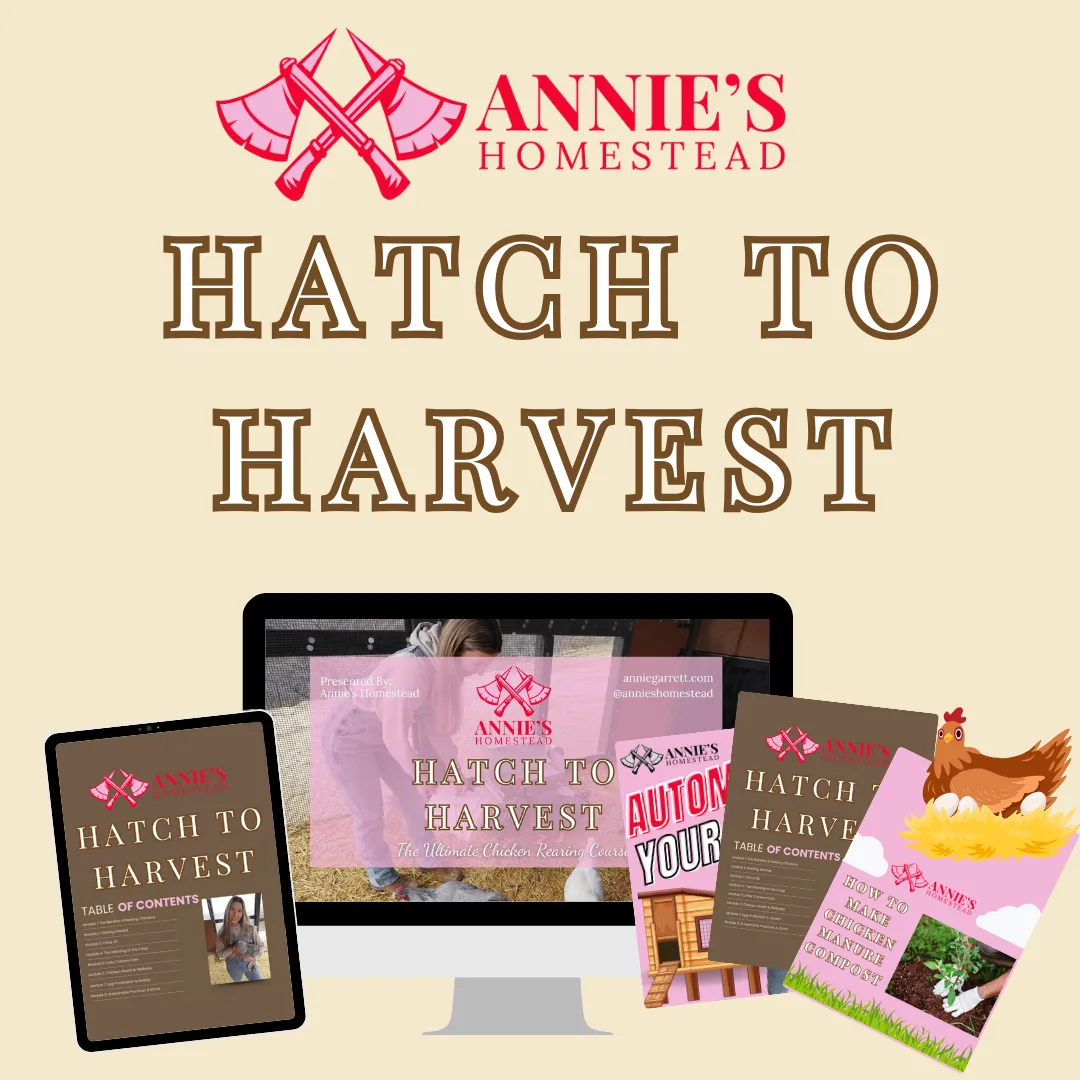
Welcome to Annie's Homestead
Take Your Homesteading to the next level!
Tired of grocery store mystery meat & wilting lettuce? Let’s grow real food, raise happy chickens, and earn money—no acres or fear required.
Does this sound familiar?
You’re over the mystery meat and wilted lettuce life.
You’re tired of not knowing what’s in your food—or where it came from. You're craving a real connection to your meals (and maybe a tomato that actually tastes like a tomato).You live in the city but your soul belongs in the dirt.
You’ve got dreams of chickens, raised beds, and canning jars—even if you're still stuck in a tiny apartment with a windowsill garden and a compost bin that scares your roommate.You’re ready to stop treating your homestead like a hobby.
You're putting in the work—growing food, raising animals, doing it all—and now you're wondering, “Wait... could this actually make money?”
If these frustrations resonate with you, you're not alone.
Let’s be real—lots of people want to live closer to the land...
But most of the info out there is either sugar-coated nonsense or so overwhelming it makes you want to throw your phone in the compost.
You're not alone—and you don't have to figure it all out yourself.
That's where Annie's Homestead comes in.

It's time to take control of your food, your lifestyle, and your future by embarking on a homesteading journey like no other.

Here, you'll find courses tailored to individuals just like you, providing you with a homestead roadmap

It's okay if you're living in a city right now! You can homestead exactly where you are.

Learning skills of fermentation, baking, bush craft, gardening and more, can help you become a homesteader even if you live in the heart of the city.

Turn your homestead into a cash cow by capitalizing on your talents so you can leave your 9-5.

Are you a home baker or gardener? Or neither? Our Homestead courses will help you discover your passion to turn into an income.
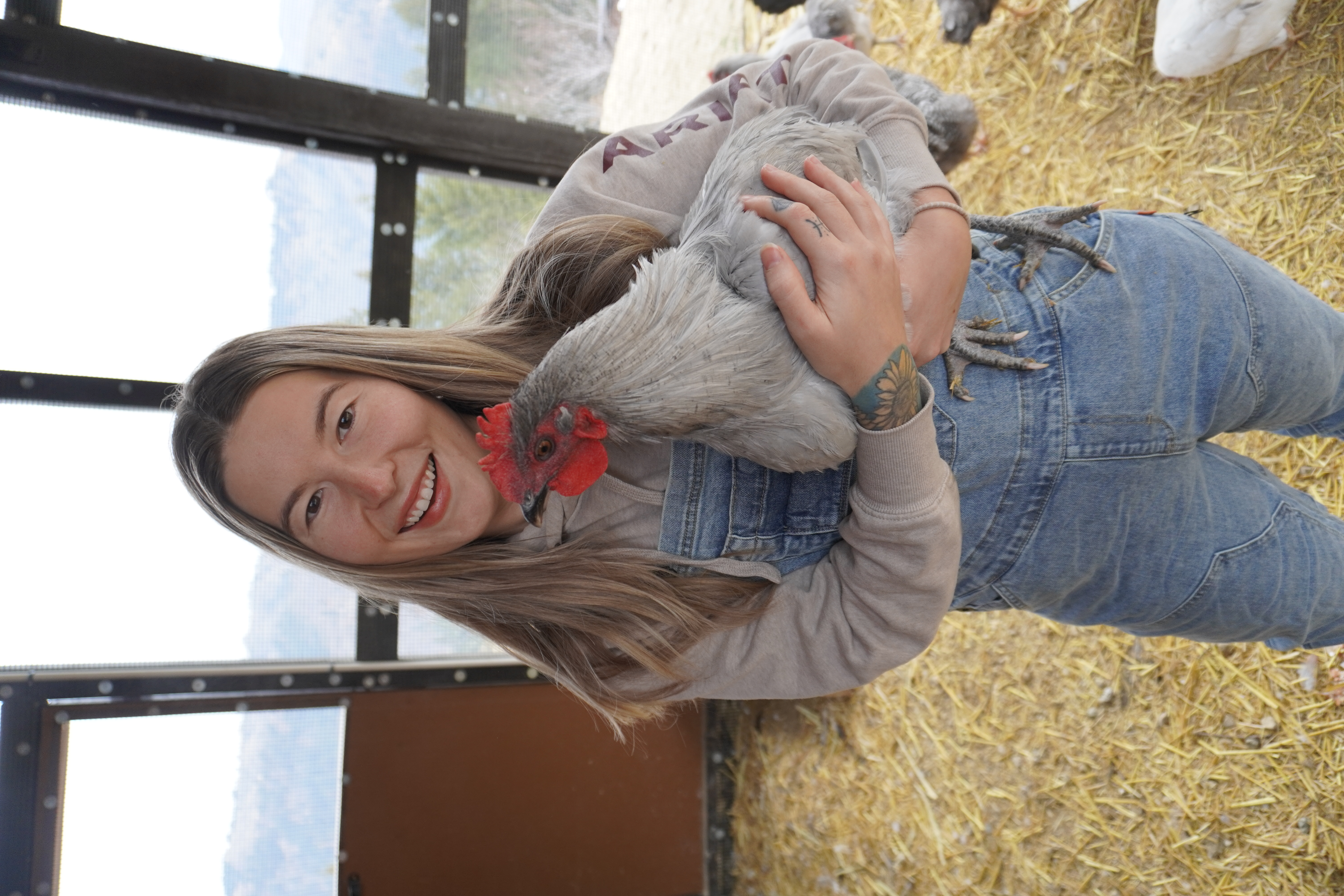
chicken coop automations
Want to streamline your chores?
From automatic door openers to refillable waterers, these innovations streamline maintenance tasks, ensuring your flock stays happy and healthy with minimal effort on your part.
Whether you're a seasoned keeper or just starting out, these time-saving solutions are a game-changer for any chicken enthusiast.
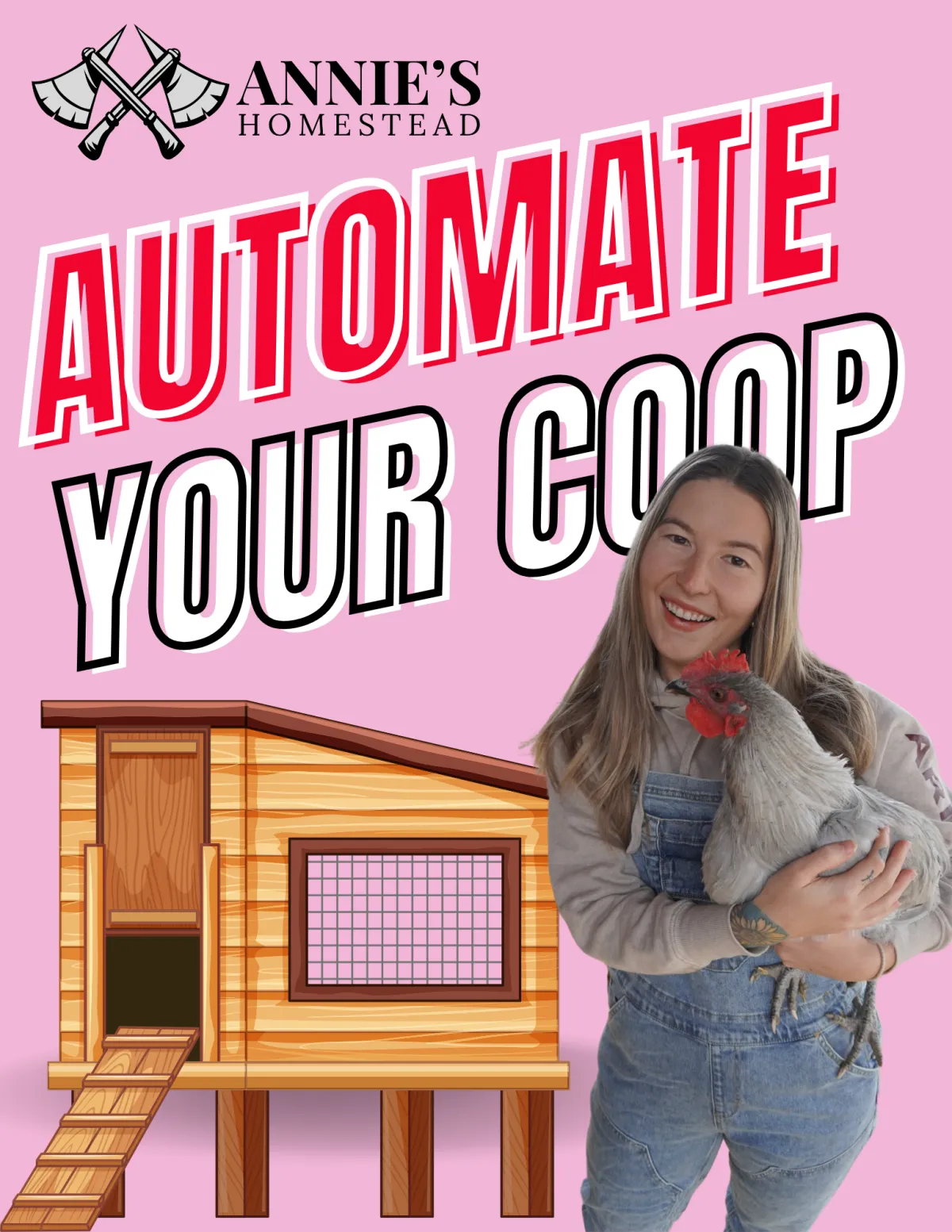
Hey There,
I'm Annie
I'm here to help you homestead with ease
You want to raise clean food. You want chickens that thrive, a garden that actually produces, and maybe even a little off-grid dream of your own.
But every time you Google something, it turns into a black hole of conflicting advice, overpriced courses, and blog posts that never really get to the point.
I get it. I was there too.
Now I live off-grid with a flock of mixed birds, an indoor grow room, and a greenhouse—because I’d rather avoid whatever’s falling from those ch3mtra!ls in the sky. I created Annie’s Homestead to make real-deal, straight-to-the-point content that helps you feel confident, not confused.
No gatekeeping. Just honest, tested resources to help you grow food, raise birds, and get out of the system—one chicken (or coop automation) at a time.
Top Resources
Streamline your chore list with our chicken coop automation list

Prepare For Emergencies with our Chicken First Aid Kit
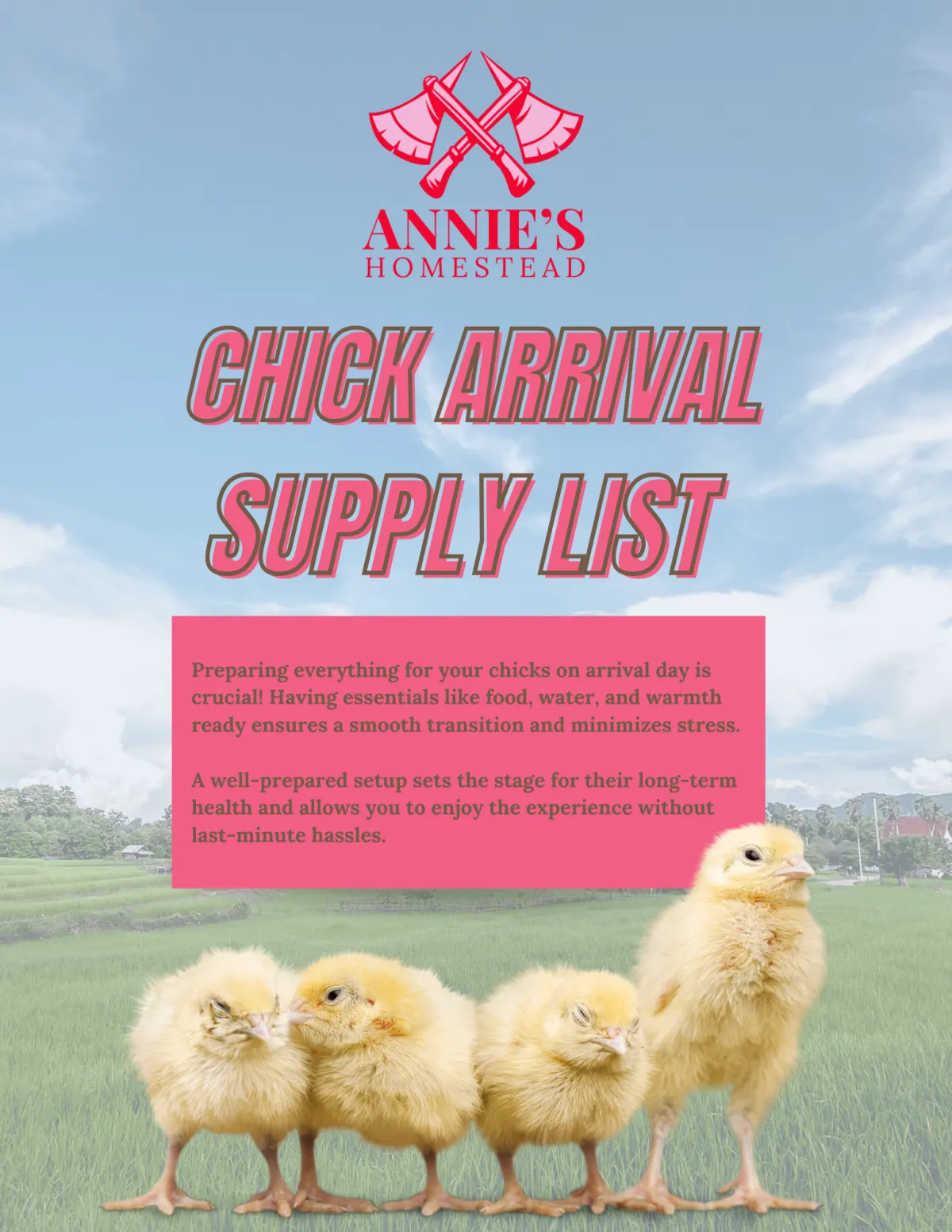
Prepare For Your New Chicks with our Favorite Essentials
Stay Updated
And join the newsletter
Be one of the firsts to know anything new and stay up to date with all the happenings on the homestead!
(I won't spam you ever - PROMISE!)
Read The Blog
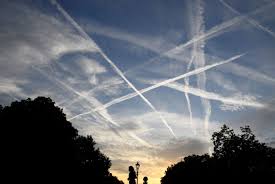
They've Been Trying to Control the Weather Since 1891
They've Been Trying to Control the Weather Since 1891
Most people hear the word "geoengineering" and immediately write it off. It sounds futuristic. Conspiracy-coded. Unreal. Our government would never do something so evil, right?
But what if the real story isn't about the future?
What if it's about the past?
Because here's something most people don't know: humans have been trying to influence the weather for well over a century. Not in theory. Not in secret. In the public patent record.
And once you see the timeline, you can't unsee it.
It starts earlier than you'd think
In 1891 — the same decade people were still traveling by horse and buggy — an inventor filed a patent with the United States Patent and Trademark Office titled "Method of Producing Rain-Fall."
That was 1891. (!!!)
By 1913 there was a patent called "Rain-Maker." By 1919, inventors were patenting processes for causing precipitation by manipulating aqueous particles in the atmosphere. By 1927, there were patents for producing smoke clouds from moving aircraft.
This wasn't fringe science. This was documented, filed, and publicly recorded experimentation.
A century of patents — in three eras
Early era · 1890s–1940s
Rainmaking, fog, and smoke. Early patents focused on producing rain, dispersing fog, and generating smoke screens. By 1915, there were even patents for protecting against poisonous gas in warfare. The atmosphere was already being seen as something that could be manipulated.
Mid-century · 1950s–1970s
Cloud seeding goes mainstream. This is where the volume explodes. Patents for cloud seeding, fog dispersal, weather modification, and atmospheric particle control multiply rapidly. Cold War interest in environmental control accelerates the research. By 1962, there were patents for "artificially influencing the weather." By 1971, for "weather modification method."
Modern era · 1980s–present
Scale and sophistication. Patents shift toward satellite-based concepts, aerosol technologies, ionosphere manipulation, and climate intervention. In 1987, a now-famous patent — often called the HAARP patent — described a method for "altering a region in the earth's atmosphere, ionosphere, and/or magnetosphere." In 1991, there was a patent for "stratospheric Welsbach seeding for reduction of global warming." By 2023, there are systems for programmable climate control panels and electromagnetic weather modification.
In total, the compiled patent record runs from 1891 all the way to 2023. Hundreds of patents. Publicly filed. Publicly searchable.
This isn't theory. It's documented experimentation — across six generations.
At what point does capability become the question?
There's an important distinction worth making here, and I want to be honest about it:
There's a difference between documented weather modification — like cloud seeding, which is openly used today to increase rainfall in drought-stricken areas — and large-scale, coordinated climate control that's harder to verify or track.
I'm not here to tell you which claims are true and which aren't. That's not the point of this post.
The point is this: when we spend over 130 years trying to influence the atmosphere, the question shifts. It's no longer "Is this possible?"
The question becomes: how far has it gone?
And that's a question worth sitting with — regardless of where you land politically, scientifically, or spiritually.
Why this matters on the homestead
For those of us growing food, raising animals, and trying to live closer to natural systems, this history feels personal in a way it might not for everyone.
We pay attention to weather differently. We notice patterns. We watch the sky, track the seasons, and feel it in the garden when something is off.
I'm not saying that awareness makes you paranoid. I think it makes you awake.
And honestly? This is one of the reasons so many people are coming back to:
Growing their own food
Building resilience into their homes and land
Paying attention to their local environment
Asking questions instead of outsourcing answers
Not out of fear. Out of awareness.
Most people are still arguing about whether weather modification is real.
Without ever looking at the timeline.
Over a century of patents.
Decades of experimentation.
And a question that still doesn't have a clean answer:
What are we actually capable of now?
I don't have all the answers. I don't think anyone does. But I'd rather ask the question out loud — from the homestead, with my hands in the soil — than pretend the history doesn't exist.
Do your own research. Look up the patent record. Form your own opinion.
That's all I'm asking.
It's time to take the first step towards your homesteading journey.
Don't let uncertainty hold you back any longer.
Our homesteading courses offer a comprehensive roadmap to self-sufficiency, guiding you step-by-step through the process of creating your own thriving homestead, no matter where you live.
Enroll in our course today and take the first step towards a brighter, more empowered future!

Annie's Homestead is not affiliated by Facebook™ in any way. Facebook™ is a registered trademark of Facebook™ Inc
Branding and Website by RoyalT Studio